Blog · Prototyping · Business
Rapid Prototyping In Pakistan: 3D Printing Services for Business Innovation
Why Pakistani startups and businesses use 3D printing to prototype products — lower costs, faster iterations, and no tooling or minimum order quantities.
Saturn3D team
25 September 2025 · updated 25 November 2026 · 2 min read
Pakistan’s manufacturing sector is good at making things at scale. What it hasn’t been good at is making one of something — quickly and cheaply — to find out whether an idea works. That’s what rapid prototyping is for.
Why prototyping used to be hard
Traditional manufacturing like injection moulding needs a mould before it makes a single part. A mould can cost hundreds of thousands of rupees and take weeks. Factories also have minimum order quantities. So a startup with an idea had two bad options: spend a lot before knowing if the design works, or skip testing and hope.
What 3D printing changes
3D printing needs no mould and no minimum quantity. You can:
- Print one part to check the fit, look and feel.
- Change the design in the morning and hold the new version the next day.
- Test several ideas side by side instead of betting on one.
- Make shapes moulding can’t, like internal channels or one-piece assemblies.
Each round costs a few thousand rupees rather than a few hundred thousand. Problems you’d have discovered after paying for tooling are found on day three instead.
Why use a service instead of buying a printer?
Importing printers and materials into Pakistan means duties, paperwork and waiting. And a printer alone isn’t the hard part — knowing how to design for printing, which material to use, and how to orient a part for strength takes experience. For most businesses, it makes sense to use a service while they’re developing a product.
When 3D printing is — and isn’t — the right tool
Great for: prototypes, small batches (1–200 parts), custom parts, jigs and fixtures, complex shapes, and products that are still changing.
Not ideal for: thousands of identical simple parts (moulding becomes cheaper), parts that face high heat, or parts that need a perfectly glossy finish straight off the machine.
The best results come from using both: prototype with 3D printing until the design is right, then move to moulding for volume.
Where it’s being used in Pakistan
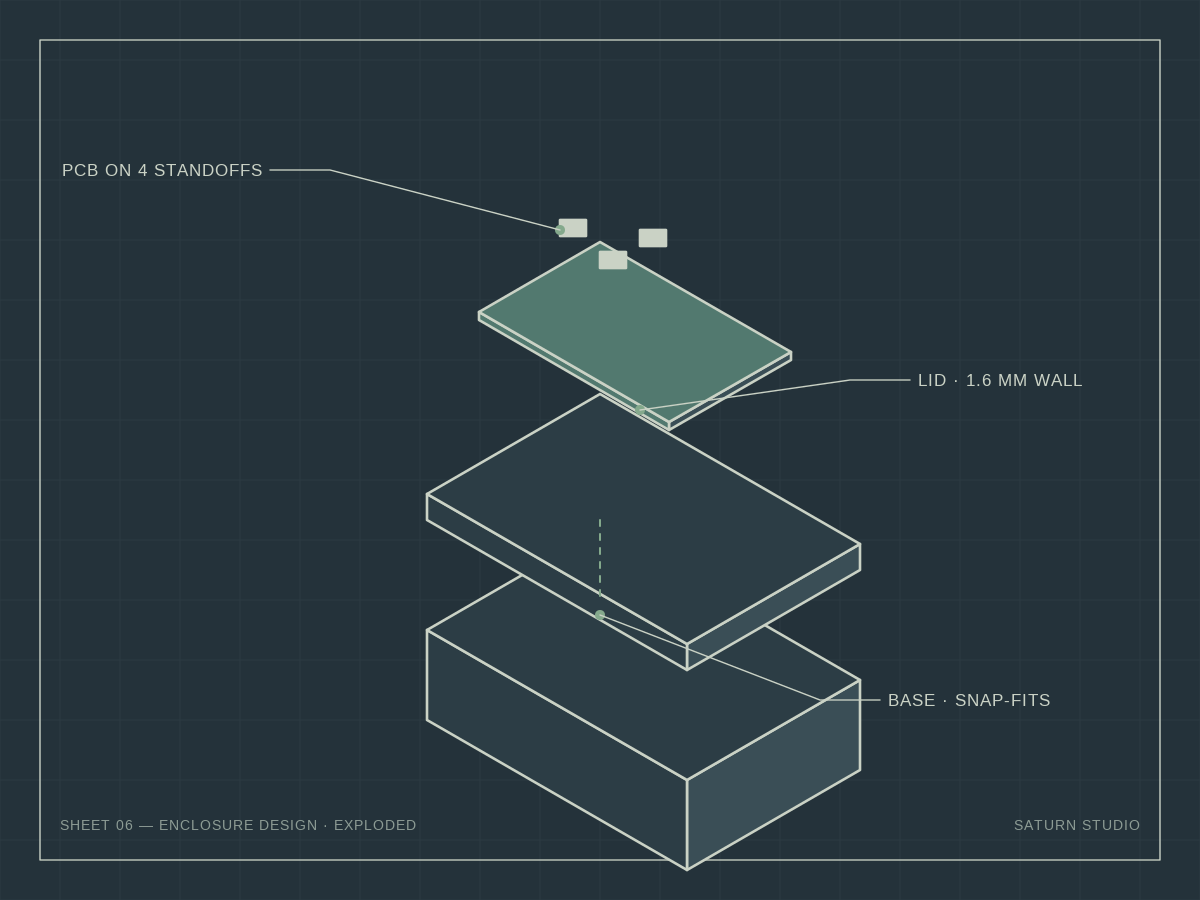
We see it every week with university robotics teams and final-year projects, agri-tech companies building sensor housings, hardware startups making enclosures for their electronics, and engineers making jigs for their production lines.
How we can help
Saturn Studio, our design and prototyping division, takes products from idea to working prototype: design, print, test and refine. If you already have CAD files, our instant quote gives you a price straight away.